
Windlass Not Working: Troubleshooting Guide
You go to drop the anchor and nothing happens. The windlass just sits there. Or it starts pulling up the chain, then quits halfway, leaving you standing on the bow wondering what to do next. We get calls like this often at Zisser Marine, and almost every owner assumes the same thing: the motor’s shot, time for a replacement.
Most of the windlasses we get called out for have nothing wrong with them mechanically at all. The fault sits in a wire, a switch, or a battery that’s not pulling its weight anymore. A corroded lug can stop a two-thousand-dollar motor cold.
So, before you start pricing a new unit, spend 10 minutes running through what’s below. Worst case, you’ve ruled things out. Best case, you fix it yourself.
Key Takeaways
- Start with the breaker, battery, and electrical connections before assuming the windlass motor has failed.
- Different symptoms point to different faults: no response, clicking, one-way operation, and slow running each narrow down where to look.
- Check for a jammed chain or gypsy before moving deeper into electrical diagnosis.
- If the problem involves buried wiring, repeated component failures, or internal motor damage, it’s usually time to call a marine electrician.
How a Marine Windlass Actually Works
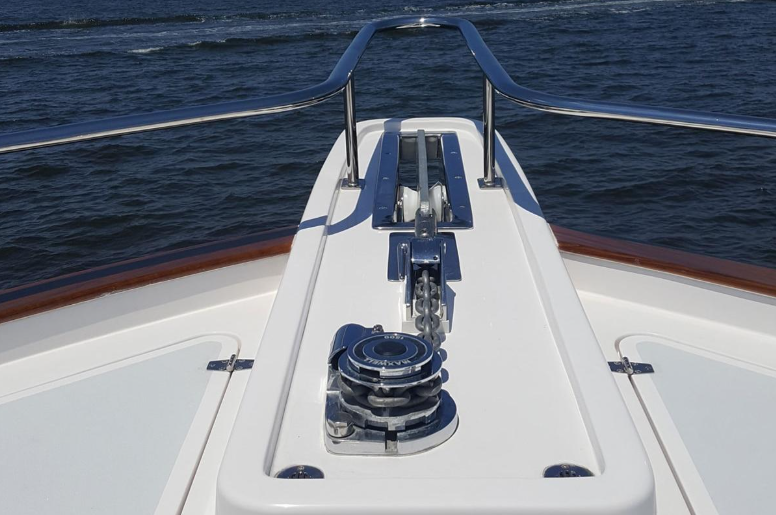
There’s not much to a windlass once you get past the deck housing. A motor spins a gypsy, which is just the toothed wheel that grabs your chain and feeds it in or out. That’s really the whole mechanical job.
The interesting part is how it gets power. A solenoid sits between the battery and the motor, acting like a heavy-duty relay. You’re not sending motor level current through your foot switch; you’re just telling the solenoid to open the real circuit. Press the switch, up on deck or a rocker at the helm or even a remote, and the solenoid does the rest.
A breaker or fuse sits in front of all this to protect the wiring from a dead short or an overloaded motor. Break any link in that chain and the windlass stops working. That’s the whole reason to check the simple stuff before assuming the worst.
Start With the Symptoms
The quickest way to troubleshoot a windlass is to pay attention to exactly what happens when you press the switch. A windlass that does absolutely nothing points you in a different direction than one that clicks, runs slowly, or works only in one direction.
The sections below walk through those symptoms one by one, starting with the simplest checks before moving into wiring, controls, and mechanical problems.
No Sound at All When You Hit the Switch
Start at the breaker panel. Windlass circuits pull a lot of current on startup, and breakers trip under that load more than owners expect. Reset it and try again.
If that doesn’t fix it, look at the battery. It might run your cabin lights just fine and still not have enough punch for a windlass motor, which draws far more current in a short burst. If you’re not sure how your battery’s holding up, this is a good time to test your boat’s battery system properly instead of guessing.
Check the Terminals Too
Corrosion loves boats. Salt air gets into every connection eventually, and a thin crust on a terminal can block more current than you’d think. Pull the covers off the battery posts and the solenoid and look for white or green buildup.
If the breaker’s good, the battery tests strong, and the connections look clean, you’re probably looking at a dead solenoid. They do fail internally without much warning, and swapping one is usually a fairly quick job.
It Clicks, But the Motor Won’t Turn
One clicks when you hit the switch tells you the solenoid engaged. Power made it to the motor. The motor just isn’t doing anything with it.
Voltage drop is the usual explanation here. Long cable runs, thin gauge wire, or a corroded connector somewhere along the way can all bleed off enough voltage that the solenoid clicks fine, since it barely draws anything, but the motor stalls because it needs far more current to actually turn.
A seized motor is possible too, particularly on an older boat. Water gets into the housing over the years and bearings can rust solid long before the windings ever fail.
Don’t Skip the Gypsy
Sometimes it’s not electrical at all. Chain wrapped the wrong way, or jammed up against the chain pipe, will stop the gypsy dead even with a perfectly good motor underneath it. Open the chain locker and take a look before you go any further down the electrical path.
One Direction Works, the Other Doesn’t
A lot of windlasses run separate circuits for up and down. That means one side can die completely while the other keeps working like nothing happened, which throws people off because “it still works” seems like proof the whole system is fine.
Deck mounted foot switches take a beating. Spray, standing water, years of use, and the contacts inside start to corrode or stick. If you’re on a remote, check the batteries in the handset first, and try the hardwired switch to rule the remote out entirely before chasing anything more complicated.
Since each direction has its own solenoid, one can quietly fail while the other runs for months without issue.
Windlass Feels Weak or Runs Slow
Nine times out of ten its voltage drop again, usually from cable that was undersized when the boat was rigged, or corrosion that’s crept in since. Under real load, once the anchor’s actually off the bottom, the strain shows up fast.
An older battery can look fine at rest and still fall apart under load. It’ll crank the motor initially and then sag the moment the real weight hits.
Worn brushes inside the motor cause a slow, gradual decline that’s easy to miss until it’s fairly bad. And mechanical binding, something catching in the gypsy or the chain pipe, adds resistance the motor was never sized to handle.
Basic Tools Worth Having on Hand
You don’t need much to work through most of this:
- A multimeter, this is the single most useful tool for windlass faults
- A wire brush for cleaning corroded terminals
- Dielectric grease, applied after cleaning any connection
- A decent light for the chain locker
- Basic hand tools to get at the solenoid
Half an hour with these will tell you more than an hour of guessing.
Telling Electrical and Mechanical Apart
Grinding noises, excessive play in the shaft, or a gypsy that refuses to turn even when the motor is receiving proper power are stronger signs of a mechanical problem. Water intrusion can also damage bearings, gears, and other internal components over time.
If the battery, breaker, wiring, and connections all check out but the windlass still won’t operate properly, the problem may be inside the motor or gearbox. At that point, professional diagnosis can save you from replacing parts unnecessarily.
Keeping It from Happening Again
A little upkeep goes a long way here:
- Rinse the windlass and switches with fresh water after runs in salt water
- Check terminals for corrosion at the start of each season
- Keep connections coated in dielectric grease
- Clear the chain locker of debris before it works its way into the gypsy
- Run the windlass under light load once in a while, not only when you actually need it
Boats we service on this kind of schedule rarely end up with an emergency call to Zisser Marine.
When It’s Time to Call a Marine Electrician
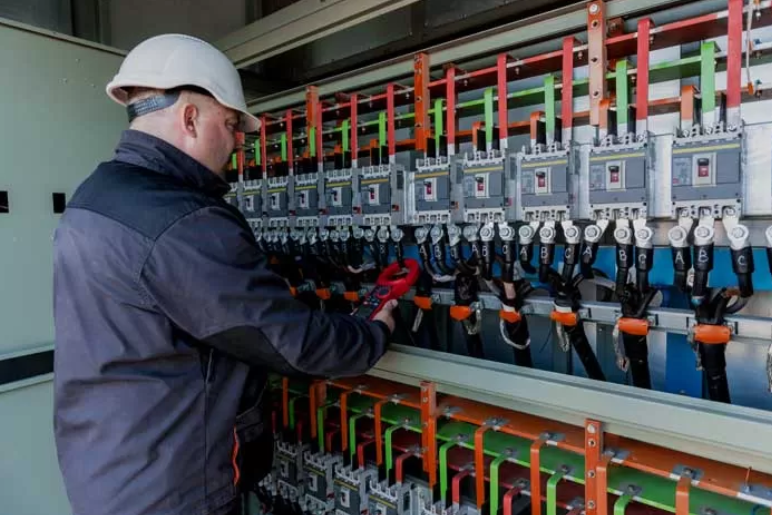
Some problems are past the point of a Saturday afternoon fix. Heavy corrosion buried in the wiring is one, since it often hides more damage than what’s visible on the surface.
A solenoid that keeps failing after you’ve already replaced it once points to something else causing the failure, not the part itself. Persistent low voltage that shows up even with a fresh battery usually means the wiring needs real tracing, not another guess with a test light.
And if the motor’s actually done, replacing it correctly involves sizing, wiring gauge, and sealing that most owners aren’t set up to handle. At that point it’s worth having a Zisser Marine electrician diagnose it properly rather than working through more trial and error alone.
FAQs
Why Does My Windlass Keep Tripping the Breaker?
Usually, the motor is pulling more current than it should. A jammed gypsy, a motor that’s struggling, or a wiring fault can all push the draw past what the breaker’s rated for.
Can I Fix a Windlass Myself?
A good chunk of it, yes. Resetting breakers, cleaning corrosion off terminals, checking battery voltage, all of that just takes basic tools and some patience. Motor rebuilds and internal gearbox work are a different story, and that’s where Zisser Marine usually steps in.
Why Is My Windlass Running Slow?
Almost always voltage drop, a battery that’s past its prime, or brushes wearing down inside the motor. Checking cable size and battery health first will usually point you in the right direction.
How Long Do Windlass Motors Typically Last?
Well, maintained, many run for a decade or more without issue. Skip the maintenance and let saltwater have its way, and that number drops considerably.
Does Every Windlass Have Separate Circuits for Up and Down?
Most do, and it’s exactly why one direction can quit while the other keeps working fine. Worth checking both independently rather than assuming a single fault explains everything.
Wrapping Up
Most windlass failures come down to wiring, connections, or power, not a worn-out motor. Work through the checks in order, and you’ll often fix it without touching the motor at all. Regular rinsing and clean connections prevent most of this from happening again.
Still stuck? The team at Zisser Marine specializes in exactly this kind of fault finding, from a quick diagnosis to a full rewire if that’s what it needs. Reach out to our marine service team and we’ll get your windlass working properly, the first time.