
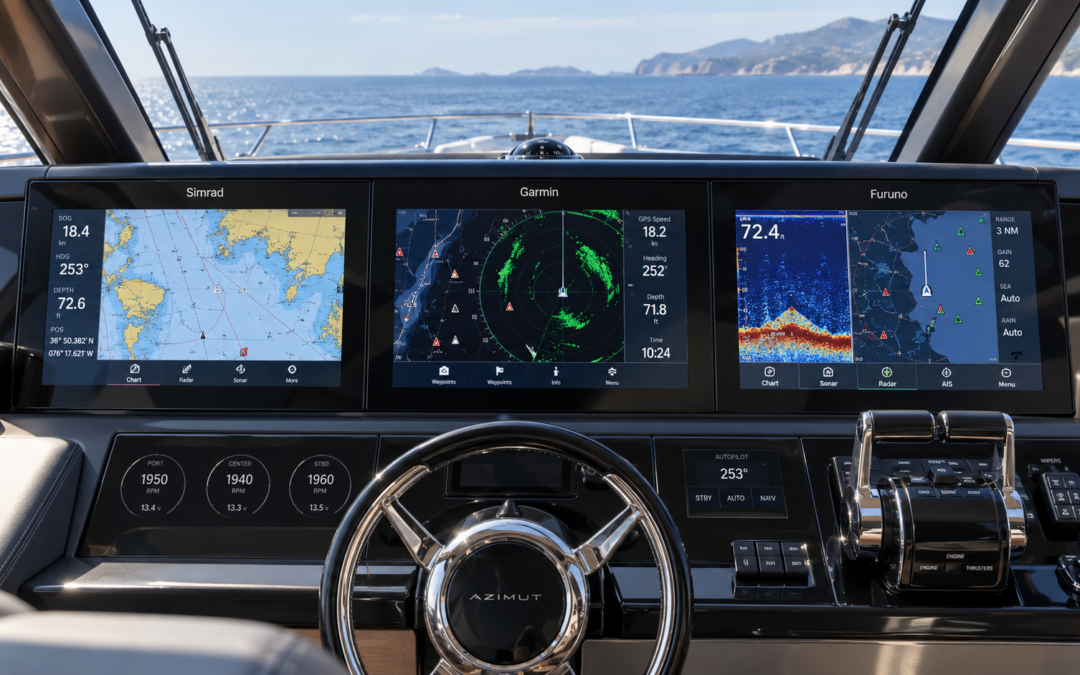
Simrad vs Garmin vs Furuno: Choosing a Marine Chartplotter
Ask ten boaters which chartplotter brand is “the best,” and you’ll get ten different answers, most of them argued pretty stubbornly. Simrad, Garmin, and Furuno each built a loyal following for good reason. None of them is bad. They just aren’t built for the exact same boater.
This isn’t a brand ranking. It’s a breakdown of where each one actually shines, where it doesn’t, and how to match that to the way you use your boat. We’re leaving price out of it entirely, since that’s a separate conversation from performance.
One thing before we dive in: even the best chartplotter is only as good as the electrical system feeding it. Old wiring or a tired power supply will bottleneck a brand-new unit fast.
Zisser Marine inspects and upgrades marine electrical systems, which is worth doing before you spend a dime on new electronics.
Key Takeaways
- Simrad stands out for radar range and flexible split-screen setups.
- Garmin has the gentlest learning curve of the three, hands down.
- Furuno is the one commercial crew keep coming back to.
- The “best” brand depends entirely on how you actually boat.
- Wiring and installation quality matter as much as the unit you buy.
What Is a Marine Chartplotter?
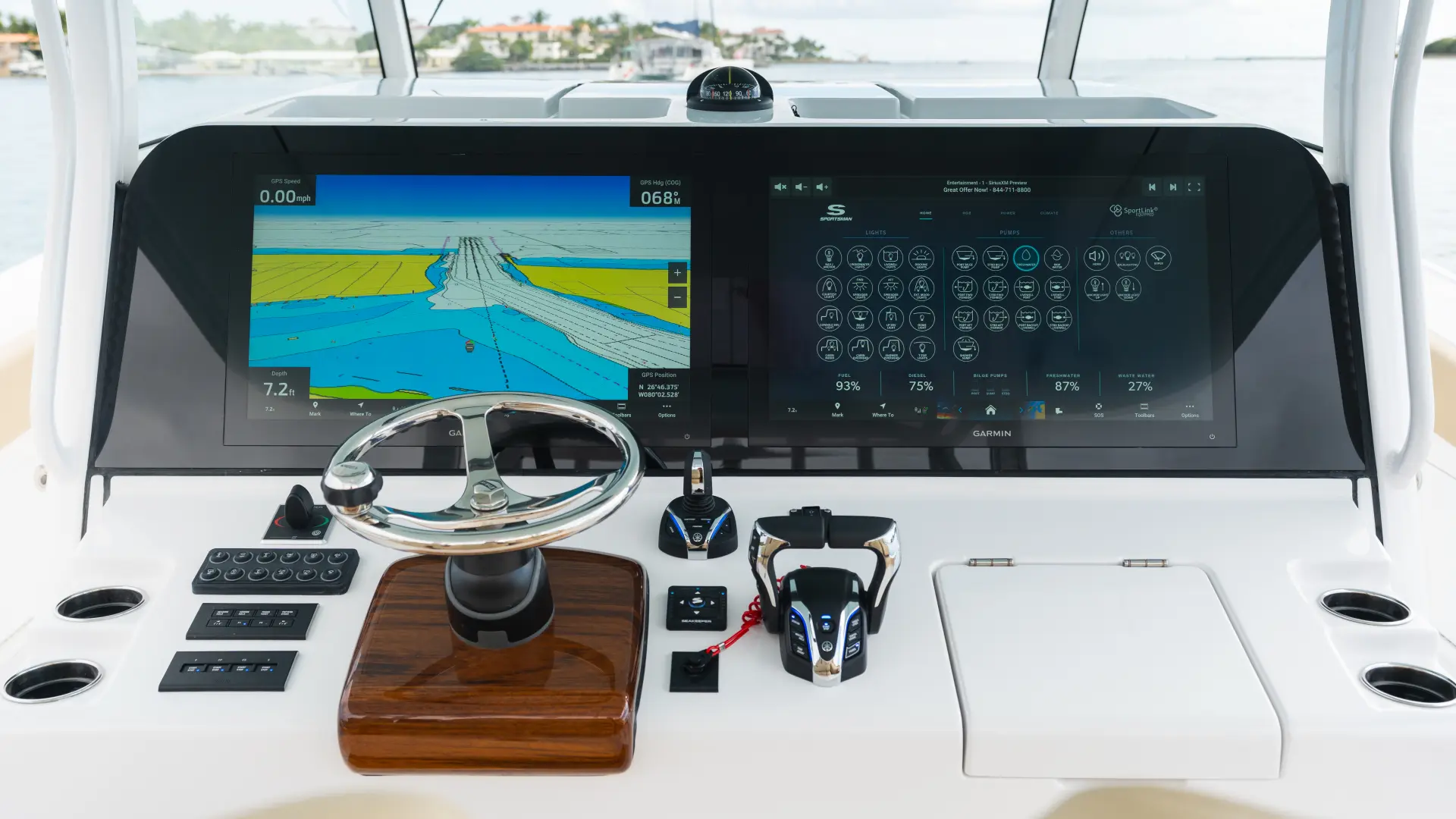
A marine chartplotter is a navigation display for your boat. It shows your position on a digital chart. It can also show routes, waypoints, depth, AIS targets, radar data, and other information. Modern units often do much more.
A chartplotter can become the main control point for your helm. Depending on the model, it can connect with:
- Radar
- Fish finders
- Sonar
- AIS
- Autopilots
- GPS antennas
- Digital switching
- Engine data
- Weather data
- Cameras
- VHF systems
This makes your choice more important than it may seem.
Factor 1: Display Quality
A screen that washes out in direct sun is worse than no screen at all.
-
Simrad
Simrad’s glass-bonded touchscreens hold their color at wide angles and cut glare reasonably well at midday.
-
Garmin
Garmin displays feel like an extension of your phone. Fast, responsive, and forgiving of wet or gloved fingers.
-
Furuno
Furuno isn’t chasing pretty graphics. It’s chasing legibility in direct sun, and it delivers on that one goal.
If you fish at noon under a blazing sky, Simrad or Furuno will treat you better. Garmin still holds up fine; it just feels a touch more consumer-grade.
Factor 2: GPS Accuracy and Mapping
Being a few feet off near a sandbar can turn into an expensive mistake.
-
Simrad
Pairs tightly with C-MAP charts. Frequent updates, and satellite lock holds even when signal gets shaky.
-
Garmin
Runs its own Navionics charts, detailed enough that most recreational boaters never look elsewhere. Lock time is quick.
-
Furuno
Built with commercial fishing vessels in mind, so accuracy stays dependable well offshore where signal often weakens.
Honestly, all three do this job competently. Garmin just gives you a slightly richer map out of the box.
Factor 3: Sonar and Fish-Finding Technology
For a lot of anglers, this single factor decides the whole purchase.
-
Simrad
StructureScan produces sharp side and down images, useful for locating structure rather than just chasing fish blindly.
-
Garmin
Panoptix sonar shows movement live. You can actually watch a fish react to your bait as it happens, which is genuinely useful.
-
Furuno
Sonar that reaches deeper water than most competitors manage. Commercial crews lean on this in serious depths.
Casual anglers tend to gravitate toward Garmin here. Furuno wins if you’re chasing fish in serious depth.
Factor 4: Radar Integration
If you’ve ever been caught in fog without radar, you already know why this matters.
-
Simrad
Halo radar picks up small targets at long range. A lot of captains rank it as the strongest on the market right now.
-
Garmin
Works well for shorter recreational runs. Setup is simple, though it can’t match the long-range punch of its rivals.
-
Furuno
This is the brand that built its reputation on radar decades ago, and commercial ships still trust it today.
Furuno and Simrad pull ahead by a clear margin here. Garmin is fine if you’re staying closer to shore.
Factor 5: Ease of Use and Interface
None of this technology means much if the menu confuses you mid-storm.
-
Simrad
Takes a short adjustment period. Once the layout clicks, it’s fast and customizable.
-
Garmin
The touchscreen interface feels natural almost immediately. New boaters pick it up without a manual.
-
Furuno
Built for trained crews, so it asks more of a first-time user than the other two.
Garmin wins this one outright, no real argument to be made otherwise.
Factor 6: Connectivity and App Integration
Boats sync with phones now. That’s just where things landed.
-
Simrad
Simrad connects through Bluetooth and Wi-Fi, and its NMEA 2000 support makes multi-device setups easier to manage.
-
Garmin
Garmin’s Connect app tracks routes and shares your location with minimal setup.
-
Furuno
Furuno, on the other hand, skips most of the lifestyle features altogether, staying focused on professional network integration instead of phone syncing.
If app convenience matters to you, Garmin leads, with Simrad close behind.
Factor 7: Durability and Build Quality
Saltwater doesn’t forgive cheap hardware.
-
Simrad
IPX7-rated and built to shrug off rough offshore conditions.
-
Garmin
Solid recreational-grade hardware. Holds up fine under normal use, year after year.
-
Furuno
Often called the toughest of the three. Commercial fleets run these units for years without failure.
For long-term commercial abuse, Furuno takes it. For weekend use, either of the other two will hold up just fine.
Factor 8: Compatibility With Other Marine Systems
Your chartplotter needs to talk to your engine, autopilot, and sensors, not fight with them.
-
Simrad
Simrad integrates deeply with Lowrance and B&G, since all three share a parent company.
-
Garmin
Garmin’s ecosystem stays closed but works smoothly, syncing trolling motors and autopilots with little hassle.
-
Furuno
Furuno connects across a wider range of third-party systems, which shows up most in commercial fleets running mixed equipment.
What you already have installed on your boat should probably decide this one more than brand loyalty.
Factor 9: Software Updates and Long-Term Support
The unit you buy today should still feel current in five years.
-
Simrad
Regular firmware updates. Older units often pick up new features through free releases.
-
Garmin
Consistent update cadence across most product lines. Older screens rarely feel abandoned.
-
Furuno
Updates less frequently, and when they land, they lean toward stability over new features.
Garmin and Simrad move faster here. Furuno trades speed for steadiness.
Factor 10: Multi-Function Display Flexibility
Some boaters want one screen doing five jobs at once. Others don’t.
-
Simrad
Splits easily into multiple windows. Charts, sonar, and radar together, without much lag.
-
Garmin
Handles split screens too, though customization feels a bit more limited than Simrad’s.
-
Furuno
Prefers dedicated displays for each function on larger vessels, rather than cramming everything into one screen.
If flexible, all-in-one layouts matter to you, Simrad edges ahead.
Factor 11: Noise and Interference Handling
Cram enough electronics into one helm and interference becomes a real problem.
-
Simrad
It generally shields well against noise from bilge pumps and other onboard gear.
-
Garmin
Garmin performs fine in most setups, though tightly packed helms sometimes need extra shielding added.
-
Furuno
It built for commercial vessels loaded with dense electronics, handles this about as well as any brand out there.
Furuno has a slight edge, though proper installation matters more than brand here.
Factor 12: Warranty and Customer Support
Even a great chartplotter needs backup when something breaks at sea.
-
Simrad
Solid warranty coverage, with a dealer network that handles repairs quickly in most coastal areas.
-
Garmin
Support gets high marks for response time. Phone support and online resources are easy to track down.
-
Furuno
Leans on marine electricians and certified dealers rather than direct consumer calls. Thorough, but slower.
Garmin is the fastest for direct support. Furuno suits boaters who already work with a trusted marine electrician.
Factor 13: Screen Size and Mounting Flexibility
Helm space isn’t the same on every boat, and that changes what actually fits.
-
Simrad
It offers a wide range of sizes, from compact single screens up to large multi-display helm setups.
-
Garmin
It covers everything from small runabouts to big center consoles with a broad lineup.
-
Furuno
It tends to favor larger, dedicated displays built for bigger commercial and offshore vessels.
Smaller boats usually do better with Simrad or Garmin’s compact options. Bigger vessels lean toward Furuno’s larger formats.
Which One Should You Choose?
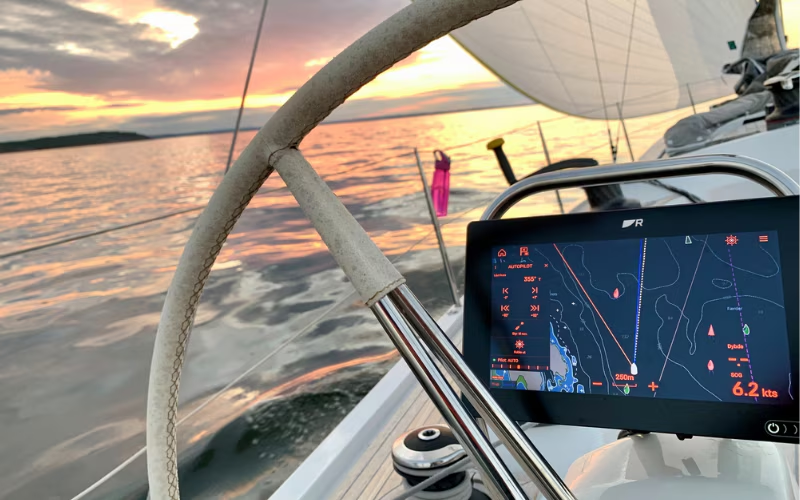
Be honest about how you actually use your boat before you decide.
- Weekend recreational boating: Garmin, for the smoothest learning curve.
- Serious sport fishing: Simrad, for the balance of sonar and radar.
- Commercial or offshore work: Furuno, for sheer toughness and radar pedigree.
There’s no single winner here, and anyone who tells you otherwise is probably selling something. The right choice depends on your vessel, your waters, and whatever gear you’re already running.
Installation quality matters just as much as the brand you pick. Loose wiring, weak grounding, or an outdated power system will shorten the life of even a great chartplotter.
If you’re upgrading your electronics or adding solar power, get a professional check first. Marine electrical maintenance protects your investment for years, not just your first season out.
Frequently Asked Questions (FAQs)
Which Brand Is Best for Beginners?
Garmin. The touchscreen and app support make setup simple for first-time boaters.
Is Furuno Only for Commercial Boats?
No, though its real strength shows up in deep-sea and commercial work more than casual weekend trips.
Can I Mix Brands on One Boat?
Yes, but expect extra wiring effort. NMEA 2000 allows some cross-brand compatibility, though results vary by setup.
Which Chartplotter Has the Strongest Radar?
Simrad and Furuno both lead in range and target detection. Garmin is fine for shorter recreational runs.
Do These Units Need Professional Installation?
Not always, but correct wiring improves reliability. A marine electrician can catch power issues before they cause real damage.
Which Brand Updates Its Charts Most Often?
Garmin and Simrad push updates frequently. Furuno updates less often but leans toward accuracy over speed.
Final Thoughts
Garmin makes life easier for new boaters. Simrad balances performance across the board. Furuno delivers rugged reliability built for tougher conditions. None of them is the “wrong” choice, just the wrong choice for a specific kind of boater.
Pick based on how you actually use your boat, not which name sounds most familiar at the marina.
Once you’ve settled on a chartplotter, make sure your boat’s electrical system can actually support it.
If you need help planning the upgrade, Zisser Marine can help assess the boat’s electrical and electronics setup before installation.