

Winterizing Your Boat’s Electrical System
Boat owners in colder states worry about ice and freezing pipes. San Diego boat owners face different problems. Salt air, humidity, and long stretches of idle time can damage your electrical system just as fast.
Your boat’s electrical system needs care all year round. This is true even without harsh winters. Skipping this care leads to dead batteries, corroded wires, and failed electronics.
This guide focuses on protecting your boat’s electrical system during periods of low use. We will cover batteries, wiring, connections, and onboard electronics.
Key Takeaways:
- San Diego’s mild climate skips freeze damage but not salt and humidity damage.
- A battery left alone for weeks can drain faster than you’d guess.
- Corrosion is the quiet killer behind most marine electrical failures.
- Small, regular checks beat expensive emergency repairs every time.
- Zisser Marine handles the inspections most owners forget to schedule.
Let’s walk through what your boat’s electrical system really needs.
Why Mild Weather Doesn’t Mean Low Maintenance
Some owners assume easy weather means an easy boat. That’s backwards. Your boat still sits idle for stretches at a time. And during that downtime, three things quietly work against your electrical system:
- Salt air corrodes anything metal that’s exposed.
- Humidity creeps into wiring, connectors, and housings.
- Batteries drain even with nothing running.
None of this cares what month it is. July and January do the same damage. The problem builds slowly, one small bit of corrosion at a time, until one day the bilge pump won’t kick on.
A neglected system rarely fails all at once. It fails in pieces, quietly, until you finally notice.
Battery Health Comes First
Everything on your boat runs through that battery. Lights. Bilge pumps. Radios. Safety gear.
Lose the battery, and you lose all of it at once.
Keep It Charged
Batteries drain on their own, even sitting untouched. Leave one too long and it can sulfate internally. That shortens its life for good, no fixing it after that point.
A few habits go a long way:
- Charge it fully before any long break from the boat.
- Use a smart charger or maintainer, not a cheap trickle charger.
- Check the battery voltage every couple of weeks.
A maintainer does the babysitting for you. It won’t overcharge the battery, and it won’t let it die either. It’s a small cost against a much bigger one.
Clean The Terminals
Corroded terminals block the flow of power. Over time, they eat away at the terminal itself.
The process is quick:
- Disconnect the battery first. Every time, no exceptions.
- Scrub the terminals with a wire brush.
- Spray on something corrosion-resistant.
- Reconnect, then check the fit is snug.
Five minutes, tops. Way cheaper than towing your boat home because it won’t start.
Know When to Pull It Out Completely
If your boat’s going to sit for weeks, just remove the battery. That way nothing can slowly drain it while you’re not looking.
Store it somewhere dry and cool. Skip the concrete floor. Concrete pulls charge from batteries faster than most people realize.
Wiring Nobody Checks Until Something Breaks
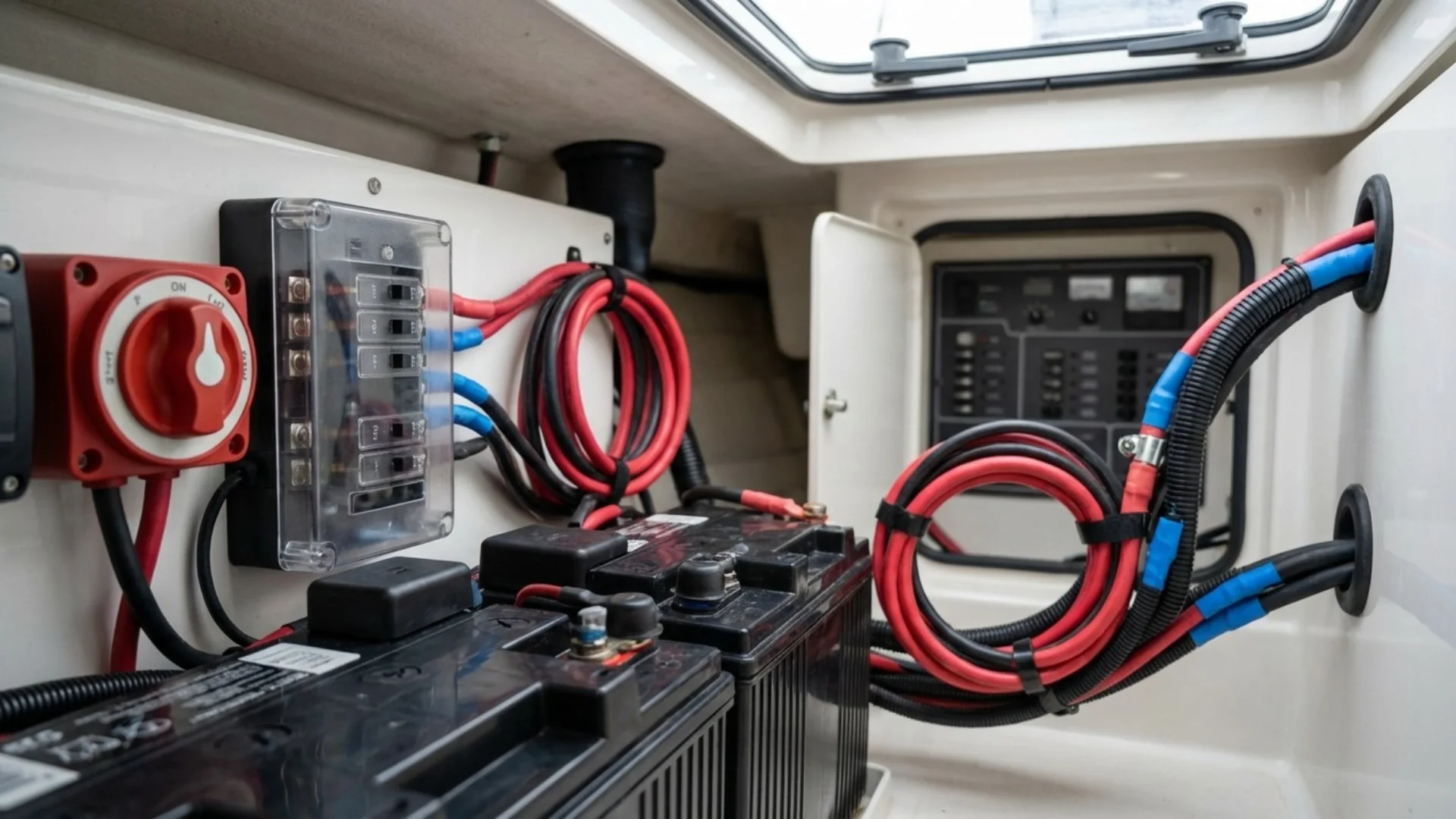
Wiring is easy to ignore. Nobody thinks about it until the moment it stops working.
Look for These Warning Signs
Salt air is rough on any exposed wire. Walk the boat and check for:
- White or green crust building up on connections
- Insulation that’s gone brittle or started cracking
- Wires that feel loose, or look frayed
- Chafing near hinges, cleats, or anything that moves
Catch these early and the fix takes minutes. Wait too long and you’re looking at replacing whole sections.
Give Your Bilge Pump Extra Attention
This isn’t just another wire on the boat. It’s what keeps water out when things go wrong.
Test it on a regular basis:
- Does the pump turn on when it should?
- Does the float switch move without sticking?
- Are the connections sealed tight against water?
Plenty of owners skip this until there’s an actual problem. That’s the wrong time to find out something’s broken. Professional marine electrical inspections catch bilge pump issues long before they become emergencies at sea.
Seal Every Open Connection
Any bare wire splice invites corrosion. Marine-grade connectors and heat-shrink tubing fix that problem fast.
Dielectric grease helps too. A little on each connector, before sealing, keeps moisture out without blocking the current flow.
Don’t Forget Your Electronics
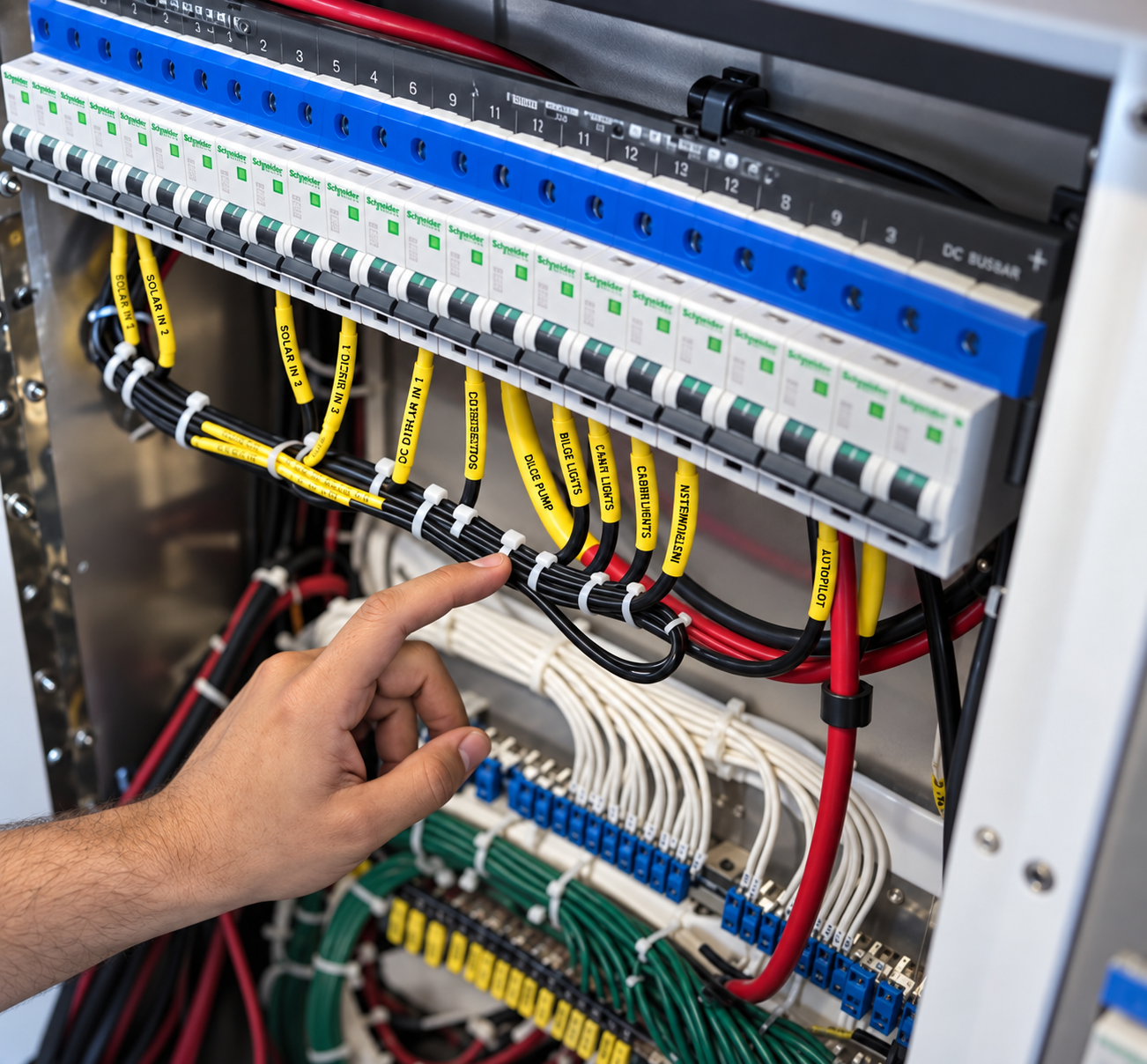
GPS units. Radios. Fish finders. Chartplotters. Modern boats run on electronics almost as much as they run on fuel.
Shut Things Down the Right Way
Flipping one switch and walking away isn’t a real shutdown. Each device has steps of its own.
- Power everything off before leaving the boat.
- Pull portable units if that’s an option.
- Store handhelds somewhere dry, not left out on deck.
Guard Against Moisture Damage
Sun and salt air wear down screens and housings slowly. Even without a drop of rain, humidity finds its way inside and causes corrosion nobody sees coming.
- Use covers made specifically for your gear.
- Keep hatches shut when you’re not using the boat.
- Peek inside housings now and then, checking for fog or moisture.
Fogging behind a screen means a seal has already failed. Deal with it right away. Waiting just lets more moisture in.
Shore Power Needs Checking Too
A lot of boats stay plugged into shore power between trips out. That connection needs checking on its own.
Inspect the Cord Itself
A worn shore power cord isn’t just annoying. It’s a genuine fire hazard.
Check for:
- Cracks or exposed wire along the length
- Bent or corroded prongs at the plug
- Warm spots near the outlet after use
Spot any of this? Replace the cord. Don’t tape it up and hope it holds.
Confirm the Charger Is Actually Working
Onboard chargers can fail quietly. You might not know until your battery refuses to hold a charge anymore.
- Watch the indicator light for a proper charging status.
- Test the battery’s voltage with a multimeter now and then.
- Listen for odd buzzing or humming near the charger unit.
A bad charger either starves the battery or floods it with too much current. Either way, the battery dies faster than it should.
Small Habits That Make a Real Difference
Beyond the bigger checks, a handful of small habits protect your system over months and years.
- Keep spare fuses on board. A blown fuse shouldn’t end your day early.
- Label your wiring if it isn’t labeled already. You’ll thank yourself later.
- Wipe down connections with a dry cloth after wet, salty trips.
- Don’t overload one circuit with too many accessories plugged in at once.
- Check your bonding and grounding system once a season.
None of these take much time. Skip them often enough, though, and small issues turn into real bills.
Salt Air and San Diego’s Unique Challenges
San Diego boaters face a specific mix of conditions most inland maintenance guides never mention. Constant sun. Salty air rolling off the Pacific. High humidity near the coast, even on clear days.
That combination speeds up corrosion in ways owners in drier climates rarely deal with. It’s part of why routine electrical checks matter more here, not less, even without winter to blame.
A Quick Note on Mechanical Basics
This guide is about your electrical system, start to finish. Still, a few mechanical basics deserve a quick mention.
- Oil Level: Keep it in the proper range.
- Water Flow: Confirm cooling works once the engine starts.
- General Appearance: Watch for leaks, loose fittings, or anything unusual.
These take a few minutes alongside your electrical check. For anything deeper mechanically, a dedicated marine mechanic is the better call.
Build a Simple Maintenance Routine
Consistency wins here, not intensity. A short list you follow beats a long one you ignore.
Try this every few weeks:
- Charge and test the battery.
- Clean the terminals.
- Check over any exposed wiring.
- Test the bilge pump and float switch.
- Look for moisture inside electronic housings.
- Inspect the shore power cord.
- Confirm the charger works properly.
- Seal any exposed connections you find.
Stick with it, and small problems rarely turn into big ones.
Signs You Need a Professional
Some jobs you can handle yourself. Others need a trained eye and the right diagnostic tools.
Call someone if you notice:
- Battery drains with no obvious cause
- Lights flickering, or power cutting in and out
- A burning smell anywhere near the electrical panel
- Corrosion that won’t come off no matter how hard you scrub
- Electronics that suddenly refuse to power on
Marine electrical systems aren’t wired like the ones in your house. Guessing your way through a fix can be dangerous, and it often makes things worse. A marine electrical diagnostic service finds the real cause instead of just patching over symptoms.
Give Your Electrical System the Attention It Deserves
Your electrical system works every single time you’re out on the water. It deserves the same care you’d give your engine or your hull.
San Diego’s climate is kind to boats in a lot of ways. But salt air and humidity never really take a day off. They wear things down slowly, whether you’re paying attention or not.
A few minutes of regular checking now saves you from getting stranded later, usually at the worst possible moment.
Zisser Marine specializes in marine electrical systems, from routine checkups to the trickiest troubleshooting jobs. Our team understands exactly what San Diego’s coastal environment does to a boat’s electrical components over time.
Schedule a marine electrical inspection with Zisser Marine and keep your boat ready, whenever you’re ready to go.
Frequently Asked Questions (FAQs)
Do I Need to Winterize My Boat’s Electrical System in San Diego?
Not in the traditional sense. Freezing weather isn’t a concern here. Salt air and humidity still call for regular electrical checks year-round.
How Often Should I Check My Boat’s Battery During Storage?
Every two to three weeks works well. It keeps the charge steady and helps you catch drain problems before they turn serious.
What Causes Corrosion on Boat Electrical Connections?
Mostly salt air mixing with moisture. Exposed metal reacts with salt over time, and that reaction is what you’re seeing as corrosion.
Can I Leave My Boat’s Battery Connected During Storage?
You can, but it’s safer not to. Disconnecting it, or using a maintainer, prevents slow drain and keeps the battery healthier longer.
How Do I Know If My Bilge Pump Wiring Needs Attention?
Test the float switch on a regular basis. If the pump doesn’t respond right away, get the wiring checked before it turns into an emergency.
When Should I Call a Marine Electrician Instead of Doing It Myself?
Call one for recurring battery drain, burning smells, flickering lights, or anything you genuinely can’t diagnose. Marine electrical work isn’t the place to guess and hope.