
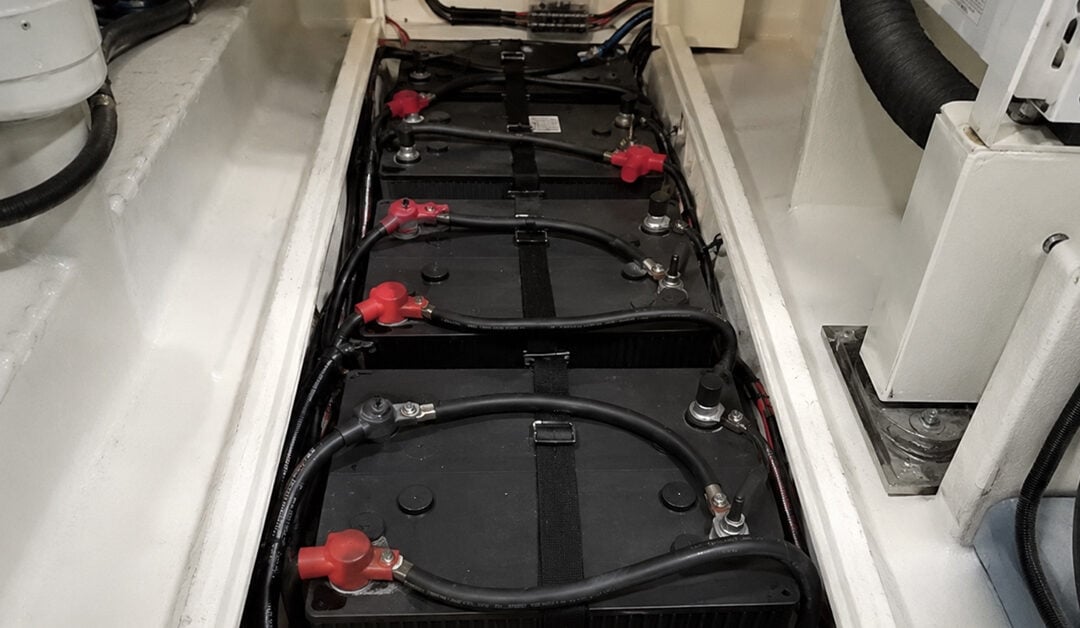
Your boat’s battery system is one of the most important electrical systems onboard, but it is often ignored until something stops working.
Dead house batteries at anchor, engines that struggle to crank, or a generator that will not start can quickly turn into a major problem, especially during longer trips or time offshore.
Knowing how your marine battery system works, how to test it properly, and when to consider replacement can help prevent unexpected failures and keep your vessel running safely and reliably.
Understanding the Different Batteries Onboard
Most modern boats use multiple battery banks. Each one serves a different purpose, and each should be tested and maintained differently.
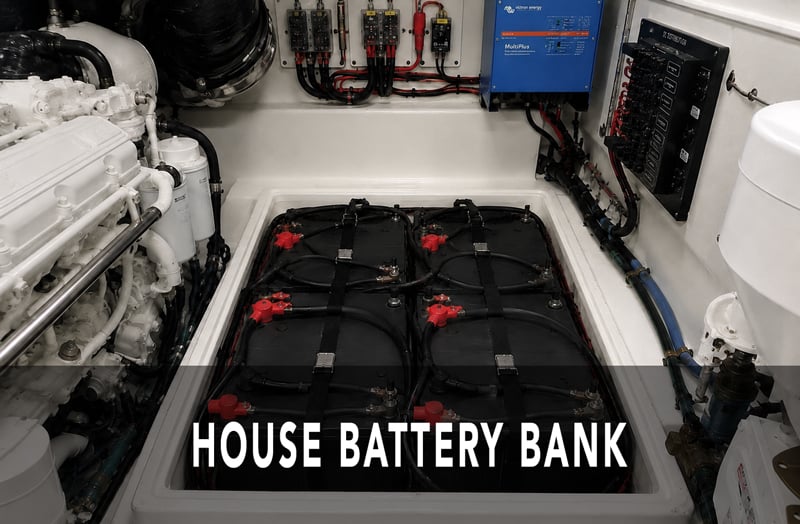
House Batteries
The house battery bank powers the everyday electrical systems onboard, including:
- Lighting
- Refrigerators
- Electronics
- Water pumps
- Stereo systems
- Navigation equipment
- Inverters and onboard appliances
House batteries are typically designed for deep-cycle use. That means they are built to discharge over longer periods and recharge repeatedly.
On larger cruising vessels, the house battery bank is often the most heavily used part of the boat’s electrical system.
Engine Starting Batteries
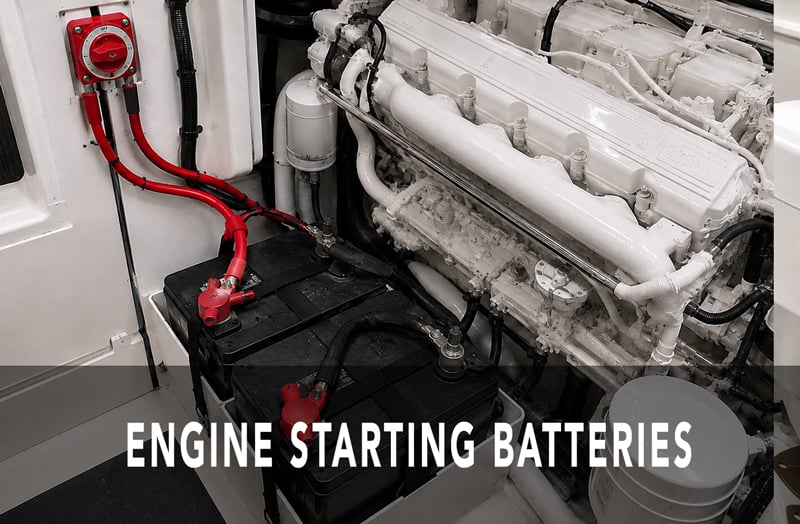
Engine starting batteries are designed for short bursts of high power. Their main job is to crank the engines reliably.
Unlike house batteries, starting batteries are not meant for repeated deep discharge. They should remain fully charged and ready to deliver power when the engine starts.
A weak starting battery may still show decent voltage when sitting idle, but it can struggle under load when the engine actually cranks.
Generator Starting Batteries
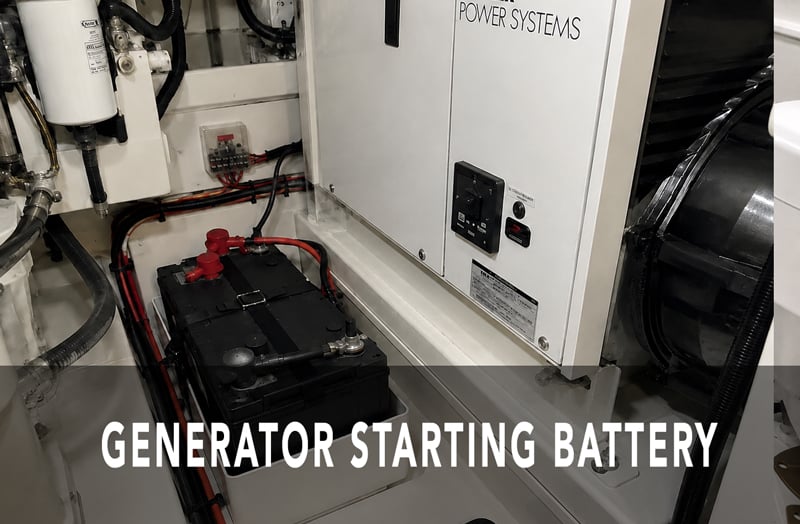
Many boats also have a dedicated generator starting battery.
This is important because the generator often acts as the backup charging source for the rest of the vessel. If the house battery bank is low, the generator battery still needs to be strong enough to start independently.
For long-range cruising boats, keeping the generator battery healthy is especially important.
Why Boat Battery Health Matters
As marine batteries age, they gradually lose their ability to hold voltage and deliver capacity.
Marine environments can also shorten battery life. Heat, vibration, corrosion, improper charging, and repeated deep discharges can all accelerate battery wear.
Many boat owners assume their batteries are healthy because the electronics still turn on or because the voltage looks normal while the charger is running. But a battery can appear fine while charging and still fail quickly once the charger is turned off.
That is why battery testing should be done with the charging source turned off.
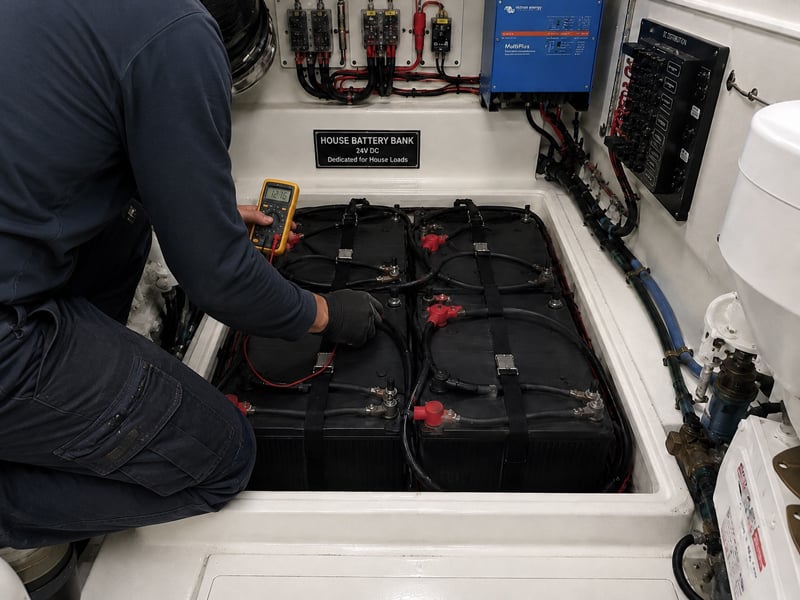
How to Check Your Boat Battery Condition
One of the simplest ways to evaluate battery health is to monitor voltage before and after applying electrical loads.
This does not replace a professional load test, but it can help identify obvious signs of weak or aging batteries.
Step 1: Fully Charge the Batteries
Before testing, fully charge the battery bank.
You can do this by connecting to shore power, running the onboard charger, or using the appropriate charging source for your system.
If possible, verify that the charger has completed its absorption stage and moved into float mode. Testing partially charged batteries can lead to inaccurate results.
Step 2: Turn Off the Charging Source
Once the batteries are fully charged, turn off the charging source.
This may include:
- Turning off the battery charger
- Disconnecting shore power
- Making sure solar charging is not affecting the reading
- Making sure alternator charging is not active
This step is important because chargers can artificially hold battery voltage high and hide a weak battery.
Step 3: Let the Batteries Rest
Allow the batteries to sit with minimal load for at least one to two hours.
This gives the surface charge time to dissipate and provides a more realistic resting voltage reading.
Step 4: Measure Resting Voltage
Use a multimeter or onboard battery monitor to measure voltage directly at the battery bank.
For a typical 12-volt battery system:
- 12.7V to 12.8V usually indicates a fully charged, healthy battery
- 12.4V to 12.5V may indicate partial discharge or aging
- 12.2V or lower after resting may suggest weakened capacity or sulfation
Voltage alone does not tell the full story, but it is a useful starting point.
How to Test Boat Batteries Under Load
A battery may hold voltage when nothing is running but drop quickly once equipment turns on.
After checking resting voltage, turn on normal onboard loads such as:
- Lights
- Refrigeration
- Electronics
- Pumps
- Inverters
- Other common DC or AC loads
Watch how quickly the voltage drops.
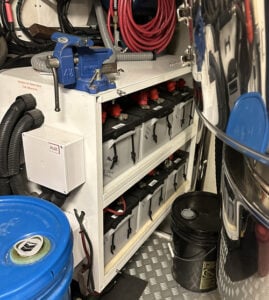 Healthy batteries usually show a slow, stable voltage decline and recover reasonably well after loads are removed.
Weak batteries often show rapid voltage drop, large voltage swings under moderate load, or poor recovery after the load is turned off.
For engine and generator starting batteries, monitor voltage while cranking. A significant voltage sag during cranking can be a sign that the battery is losing strength.
Signs Your Boat Batteries May Need Replacement
Boat batteries may need replacement if you notice any of the following:
- Batteries no longer hold a charge overnight
- Voltage drops quickly under normal loads
- Engines crank slowly
- The generator struggles to start
- Battery cases are swollen
- Terminals show heavy corrosion
- Batteries feel unusually hot
- Batteries are past their expected service life
- Electronics shut down sooner than expected
- Inverters trip or shut down under normal use
Even if the batteries still work, declining performance can become a serious reliability issue during long trips, offshore travel, or extended time away from shore power.
Why Early Battery Testing Matters
Battery failures rarely happen at a convenient time.
Catching weak batteries early can help prevent:
- Engine starting failures
- Generator starting problems
- Loss of navigation electronics
- Inverter shutdowns
- Charging system strain
- Unexpected electrical issues while underway or at anchor
Routine battery testing is one of the simplest preventative maintenance checks a boat owner can perform.
For vessels used frequently, especially cruising boats and larger yachts, periodic battery inspections can save time, money, and frustration.
Need Help Testing or Replacing Your Boat Batteries?
If you are unsure about the condition of your boat’s battery system, a professional marine electrical inspection can help identify weak batteries, charging problems, wiring issues, and potential failure points before they become larger problems.
A proper inspection can confirm whether your batteries need replacement or whether the issue is related to the charger, alternator, wiring, terminals, or onboard electrical loads.
Contact Us for Marine Battery Service
If you are having issues with your boat’s batteries, charging system, generator starting battery, or onboard electrical power, contact us to schedule a marine electrical inspection.
We can help test your battery system, identify weak or failing batteries, check charging performance, and recommend the right replacement solution for your vessel.